
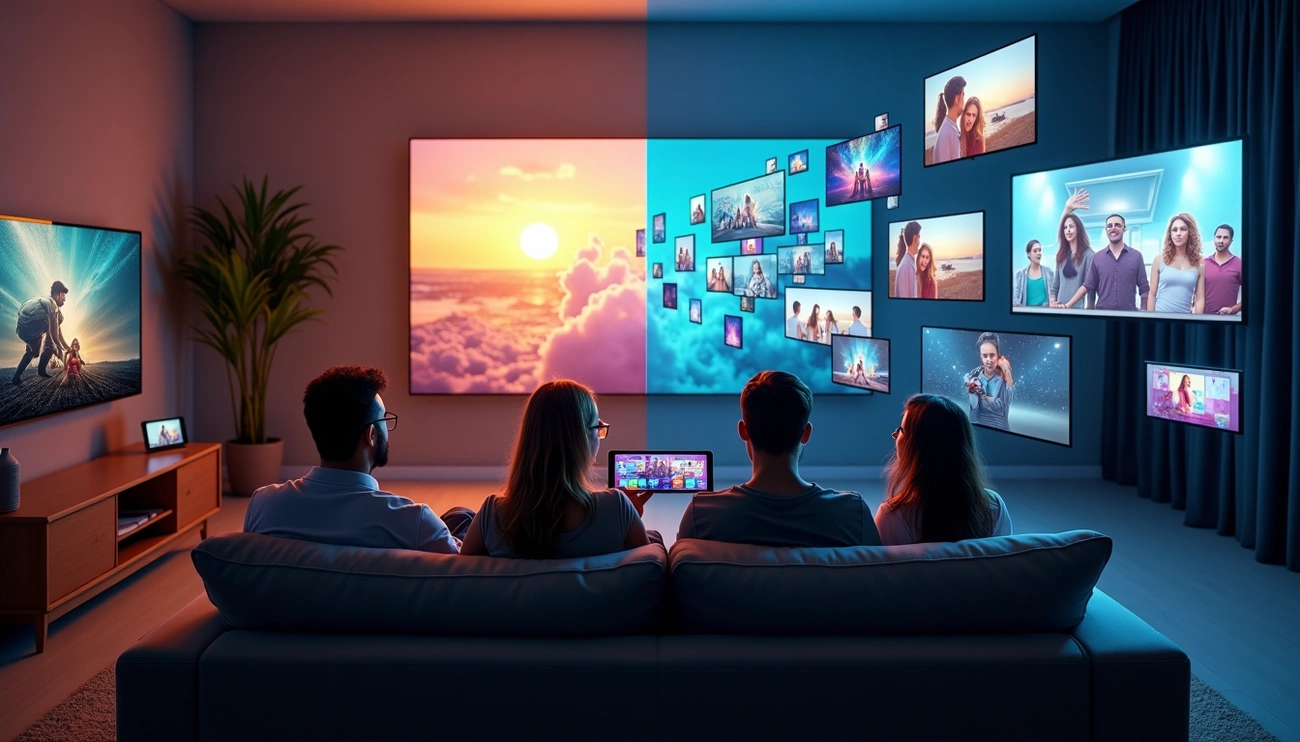
Digital transformation has completely reshaped how we consume television content. Remember when you had to rush home to catch your favorite show at a specific time? Those days are rapidly disappearing. Netflix, Disney+, and other streaming giants have fundamentally altered the entertainment landscape, giving viewers unprecedented control over what, when, and how they watch.
Traditional television networks now face an existential crisis as streaming platforms continue to gain momentum. Consequently, cable subscriptions have declined by over 25% since 2012, with younger generations leading the exodus from conventional TV viewing. This shift represents more than just a change in viewing habits—it signifies a complete restructuring of the media industry’s economic foundations.
Furthermore, the streaming revolution extends beyond convenience. These platforms have transformed content creation, distribution models, and even how stories are told. This article examines why streaming services dominate the media landscape, how they’ve changed our relationship with entertainment, and what the future holds as digital transformation continues to reshape the industry.
How streaming changed how we watch TV
The television landscape has undergone a remarkable transformation over the past decade. Gone are the days when viewers rushed home to catch scheduled broadcasts or waited for someone to return a movie to the rental store. Instead, we’re now in an era where content is available at our fingertips, whenever and wherever we want it.
From scheduled shows to on-demand viewing
The fundamental shift in media consumption began with Video on Demand (VOD) technology, which allows users to access content at their convenience rather than being tied to a broadcaster’s schedule. This change has essentially transferred control from networks to viewers [1]. Initially, VOD services were primarily offered through cable operators’ set-top boxes, but today they’ve expanded primarily to online streaming platforms.
This transformation has given viewers unprecedented freedom to:
- Select content from vast libraries
- Watch at their convenience regardless of original broadcast times
- Control playback functions (pause, rewind, fast-forward)
- Access content from virtually any location with appropriate devices [1]
The impact is significant—viewers no longer need to plan their lives around TV schedules. Instead, they can fit entertainment into their daily routines. Indeed, this flexibility is a primary reason why streaming has become so dominant. By 2025, streaming represented 44.8% of TV viewership, while broadcast (20.1%) and cable (24.1%) combined for just 44.2% [2].
The rise of binge-watching culture
Perhaps one of the most notable changes in viewing behavior is the phenomenon of binge-watching—consuming multiple episodes of a television series in rapid succession. This guilty pleasure of our generation has become mainstream, with many viewers watching between two and six episodes of the same show in one sitting [3].
Binge-watching has fundamentally altered both how we consume and how creators produce television. Streaming platforms design shows specifically for marathon viewing sessions, with narrative structures that encourage continued watching. Additionally, this shift has compressed the cultural conversation around TV shows, changing how we discuss and experience media together [3].
The statistics are telling—in the United States, people watch an average of 21 hours of streamed digital media each week, and 99% of all households subscribe to at least one streaming service [4]. For younger audiences, particularly Gen Z, the shift is even more dramatic. Viewers aged 16-24 spend merely 20 minutes daily watching live TV, compared to 1 hour 33 minutes on video-sharing platforms like TikTok and YouTube [5].
Mobile and multi-device access
The flexibility of streaming extends beyond scheduling to device choice. Multi-device streaming has revolutionized how we engage with content, allowing viewers to start watching on their TV, continue on a tablet while cooking dinner, and finish on a smartphone in bed [6]. This seamless transition between devices ensures entertainment fits into viewers’ schedules rather than the reverse.
Furthermore, multi-device access caters to different preferences within households. While one person watches drama on the living room TV, another can enjoy sports on their laptop, and children can watch cartoons on tablets—simultaneously [6]. For frequent travelers, this capability is particularly valuable, ensuring favorite shows are always accessible regardless of location.
The TV set remains central to home viewing, accounting for 84% of TV and video content watched at home in 2023 [5]. However, its role is evolving—34% of time spent watching YouTube at home now occurs on a TV set, up from 29% in 2022, with this figure rising to 45% among children aged 4-15 [5].
As we move further into the digital age, these transformations in viewing habits continue to reshape not just how we consume content, but also how it’s created, distributed, and monetized.
Why traditional TV is losing ground
Traditional television, once the undisputed king of entertainment, faces unprecedented challenges in today’s rapidly evolving media landscape. The numbers tell a compelling story of an industry in decline, with viewers increasingly abandoning conventional viewing methods for digital alternatives.
Decline in cable subscriptions
The exodus from cable TV continues at an alarming rate. Traditional pay TV homes fell at an 11% yearly rate in early 2025 [7], with cable subscriptions plummeting from 105 million in 2010 to just 66.1 million today—a staggering 34.57% decline [8]. This downward spiral shows no signs of slowing, as 4.9 million people cut the cord just last year, bringing the total number of cord-cutters to 39.3 million [9].
Price overwhelmingly drives this shift, with 86.7% of cord-cutters citing cost as their primary motivation [8]. Many households feel they’re paying premium prices for large channel bundles they barely watch [9]. By 2030, projections suggest it will be nearly a 50-50 chance whether a home has cable at all, with adoption expected to drop from the current 81% to approximately 55% within a decade [9].
Younger audiences shifting to digital
The generational divide in viewing habits has become increasingly pronounced. Among adults aged 16-24, less than half (45%) now watch broadcast TV weekly, down from 48% in 2023 [10]. This younger demographic spends a mere 17 minutes watching live TV daily [10], compared to 1 hour and 33 minutes on video-sharing platforms like TikTok and YouTube [11].
Even more telling, less than a quarter of 16-24 year-olds’ in-home video viewing is to broadcaster content, versus 90% for those aged 75 and over [10]. For many young adults who grew up with streaming, the concept of scheduled programming feels outdated and irrelevant. As one study noted, “YouTube is now the first place younger viewers go as soon as they switch on” their TVs [10].
This trend isn’t limited to Gen Z. Even older demographics are gradually shifting their viewing habits, with over-55s now watching nearly twice as much YouTube content on their TVs compared to the previous year [10].
Ad fatigue and lack of personalization
Beyond cost and convenience factors, traditional TV suffers from fundamental design flaws that frustrate modern viewers. Ad fatigue ranks high among these irritants—41% of respondents cite “sitting through fewer ads” as motivation for switching to paid streaming services [12].
Furthermore, traditional TV lacks the personalized experience viewers now expect. A study found that 96% of viewers would use a personalized channel if offered by television broadcasters and were willing to pay an extra £14.30 monthly for this feature [13]. Netflix highlighted this pain point in a 2016 paper, noting that subscribers spend only 60-90 seconds scanning content before giving up if they don’t find something appealing [13].
Traditional TV’s rigid, one-size-fits-all approach simply cannot compete with streaming platforms’ sophisticated recommendation algorithms and user-centric designs. As viewers increasingly demand content tailored to their specific interests, broadcast television’s standardized programming schedule becomes a significant liability in the digital transformation era.
The Netflix and Disney+ effect on content creation
Streaming giants have completely altered the entertainment production landscape through unprecedented investment in content. Currently, the top six global content providers (including Disney, Netflix, and Paramount) will invest a staggering £100.06 billion in content in 2024 alone [14]. This massive financial commitment reflects how streaming platforms have fundamentally transformed not just how we watch TV, but what gets made and how it’s produced.
Original programming and exclusive releases
The battle for subscribers has sparked a content arms race. Original programming accounts for over £44.47 billion (45%) of major providers’ total spending since 2022 [14]. Netflix leads this charge as the top investor in global streaming content, averaging £11.52 billion annually in original and acquired programs [14].
Disney’s acquisition strategy exemplifies this commitment to exclusive content. Between 2006 and 2012, Disney spent billions acquiring Pixar (£5.88bn), Marvel (£3.18bn), and Lucasfilm (£3.18bn) [15]. These strategic purchases gave Disney+ instant access to the world’s most valuable entertainment franchises, providing a foundation for exclusive series like Loki and Shōgun [16].
Global content production and localization
Streaming services increasingly focus on international content to attract global subscribers. Today, international (non-US originating) programming accounts for 40% of Paramount+’s and a remarkable 52% of Netflix’s content spend in 2024 [14]. This shift toward global production serves multiple strategic purposes – international content is typically cheaper to produce and effectively attracts new and niche audiences [1].
Nevertheless, this global approach varies by company. While Netflix and Amazon have doubled down on international production, Disney has reduced its commissioning of international originals in recent years, focusing primarily on regions where it makes financial sense [17].
Faster production cycles and data-driven decisions
Perhaps most transformative is how streaming platforms have revolutionized production decision-making. Major streaming services utilize advanced data analytics to inform virtually every aspect of content creation [18]. This approach allows them to:
- Create content that precisely targets viewer preferences
- Make rapid decisions about renewals or cancelations
- Develop global distribution strategies based on viewing patterns
Moreover, operational speed has become crucial in this competitive landscape. Content companies must now develop systems flexible enough to rapidly adapt to new distribution platforms, markets, or audience trends [19]. The ability to quickly create, process, and deliver content across multiple supply chains under tight deadlines has become essential for survival [19].
In effect, streaming platforms have transformed entertainment from a primarily artistic endeavor to a data-optimized science, where success depends on balancing creative vision with algorithmic insights.
Economic shifts in the media industry
The financial foundation of the media industry is experiencing seismic shifts as streaming platforms redefine revenue generation strategies. Money follows eyeballs, and as viewer habits change, entire business models must evolve or perish.
New revenue models: subscriptions vs ads
The streaming business landscape is entering a mature phase where profitability—not just subscriber growth—has become paramount. Streaming services initially bet heavily on subscription-only revenue models, but this approach has proven insufficient for long-term sustainability [20]. Currently, many providers are implementing a two-pronged strategy: raising subscription prices while simultaneously introducing ad-supported tiers.
Netflix exemplifies this shift. After implementing password-sharing restrictions, they added nearly 9 million new subscribers while simultaneously raising prices on both ad-supported and premium subscriptions [20]. Similarly, Disney+ and Hulu have raised prices on ad-free options while keeping ad-supported tier costs steady [20]. This strategic pricing encourages cost-conscious viewers to accept advertising in exchange for affordability.
Content licensing wars and exclusivity
The battle for exclusive content is intensifying as platforms recognize intellectual property as the crown jewel of media transactions [3]. Exclusive contracts have become prevalent—86.7% of titles from third-party studios appeared on only one service as of 2022 [4]. These agreements allow streaming services to differentiate their offerings and reduce competition, while studios can leverage exclusivity to negotiate higher license fees [4].
Interestingly, these arrangements affect companies differently. Smaller streaming services benefit substantially from exclusive deals (Hulu’s payoff increasing by 110.1%), while larger services see modest gains or even losses (Netflix gains 1.6%, Amazon Prime loses 5.3%) [4]. For studios, smaller operations experience an 8.1% gain while major studios see a 5.7% loss [4].
Impact on traditional advertising revenue
Traditional TV advertising is facing unprecedented pressure as viewers migrate to streaming platforms. The UK’s Traditional TV Advertising Market is experiencing decline as audiences increasingly prefer streaming services that offer on-demand, personalized viewing experiences [21]. This shift is most pronounced among younger demographics who favor ad-free or precisely targeted content.
Simultaneously, streaming platforms are enhancing their advertising capabilities. Many services are reducing commercial time—Disney+ limits ads to four minutes per hour of content [20]. Furthermore, streaming technology enables more sophisticated targeting than traditional TV, allowing brands to reach specific consumer segments rather than broad demographics [20].
Presently, about 6% of all streaming subscribers in the US canceled their services in September 2024—the highest churn rate ever recorded [20]. Therefore, balancing subscription costs with advertising loads remains a critical challenge as streaming services pursue profitability in an increasingly competitive marketplace.
What the future of media looks like
The streaming revolution continues to reshape entertainment as three key technologies drive the next phase of digital transformation in media.
AI-powered recommendations and personalization
Personalization now defines the streaming experience. Netflix’s sophisticated AI analyzes viewing habits, ratings, searches, and time spent on the platform to curate tailored content recommendations [22]. About 75% of what viewers watch on Netflix comes from these personalized suggestions [22]. The platform employs reinforcement learning to continuously refine recommendations based on real-time feedback, including play actions, skips, and explicit ratings [22]. Currently, 71% of consumers expect personalized interactions, with 76% expressing frustration when this doesn’t happen [6].
Virtual and augmented reality integration
Immersive technologies are gradually entering mainstream media consumption. AR enhances live sports viewing with real-time stats overlays, virtual player comparisons, and interactive replays [23]. Meanwhile, music festivals and concerts have started adopting VR, allowing fans to attend performances virtually [23]. Notably, streaming VR content faces challenges including high device costs, bandwidth requirements, and production expenses [23]. Nevertheless, industry leaders predict dedicated AR/VR content libraries will become mainstream within 3-5 years [23].
Consolidation and global expansion of platforms
The media landscape is undergoing strategic realignment as companies seek scale to remain competitive [24]. This trend manifests through mergers like Paramount’s £6.35bn deal with Skydance and Telia’s £492.38m divestiture of its Nordics TV business [24]. Concurrently, platforms are expanding globally through localized interfaces, partnerships with telecom providers, and regional content acquisitions [25].
Conclusion
The digital transformation of media continues to accelerate at an unprecedented pace. Traditional television networks face significant challenges as viewers increasingly abandon scheduled programming for the flexibility and personalization offered by streaming platforms. Consequently, cable subscriptions continue their steep decline while streaming viewership rises, particularly among younger demographics who view scheduled broadcasting as outdated.
This shift extends far beyond merely changing how we watch content. Streaming giants have fundamentally altered what gets made, transforming production processes through data-driven decision making and massive investments in original programming. The economics of media have likewise undergone substantial restructuring, with new revenue models combining subscription and advertising approaches to maximize profitability.
Looking ahead, the streaming revolution shows no signs of slowing down. AI-powered personalization will become increasingly sophisticated, making content discovery more intuitive and tailored to individual preferences. Though still emerging, virtual and augmented reality technologies promise to create even more immersive viewing experiences. Meanwhile, industry consolidation will likely continue as companies seek global scale to remain competitive in an increasingly crowded marketplace.
Traditional TV won’t disappear overnight. Nevertheless, its dominance has undeniably ended. The future belongs to platforms that offer viewers what they increasingly demand – convenience, control, and customization. Rather than rushing home to catch scheduled shows, viewers now expect content to fit seamlessly into their lives, available whenever and wherever they want it. This fundamental power shift from broadcasters to audiences represents perhaps the most significant transformation in media since television first entered our homes.