If you are a working adult trying to grow your career without pausing your life, understanding the asynchronous class meaning can be the difference between stalled progress and steady momentum. In simple terms, asynchronous learning lets you study on your own schedule using recorded lectures, readings, practice tasks, and discussion boards, rather than attending live sessions at fixed times. Because time is the number one barrier professionals cite in training surveys, this format removes the biggest obstacle between you and your next promotion or certificate. How do you make it work in a real workweek with meetings, commutes, and family? This guide breaks down the core concept, clarifies how it compares with live online classes, and then shares eight proven strategies that busy professionals use to succeed. Along the way, we will show how Apex Virtual Education’s expert-led catalogue make flexible learning practical and credible for Business, Accounting/Finance, Technology, Engineering, Health, Arts, Academics, and Human Resources (HR) goals.
Asynchronous Class Meaning for Busy Professionals
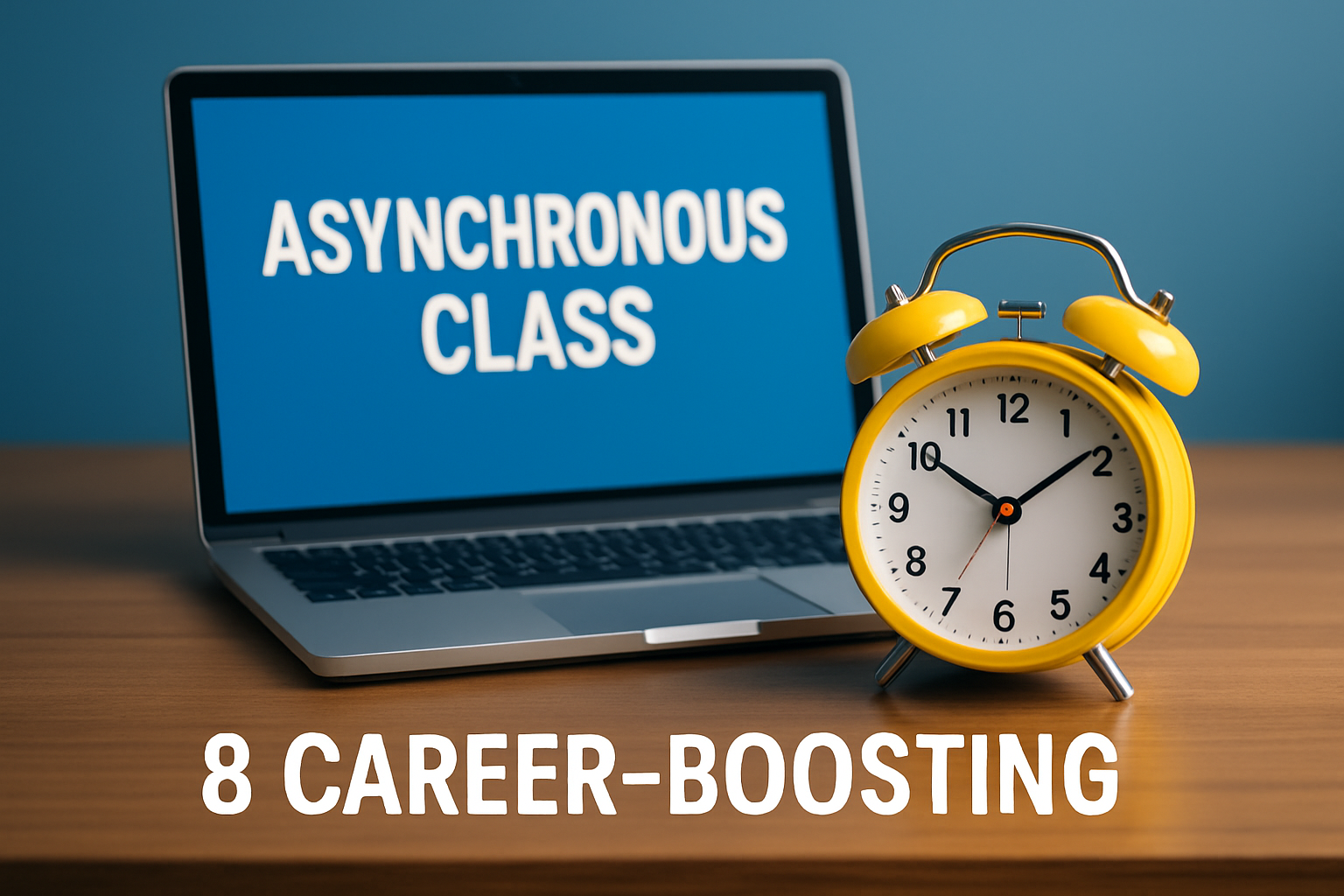
At its core, asynchronous learning is a course structure that decouples instruction from real-time attendance. You access modules when it fits your calendar, complete assignments within a due-date window, and interact with instructors and peers through messaging, discussion forums, or feedback comments. Instead of a single weekly lecture, you get a set of resources you can pause, rewind, and revisit, plus opportunities to submit work and receive guidance. For many professionals, this means learning becomes a daily, bite-sized habit rather than a calendar conflict. It is especially powerful when combined with skill-based curricula and, in some cases, certificates that verify achievement. Apex Virtual Education designs much of its catalog around skill-based learning.
What exactly should you expect in a well-designed asynchronous class? Think of it as a toolkit rather than a timetable. You might see a weekly learning path that opens on Monday and closes Sunday night, with checkpoints spaced to encourage progress. Depending on the course and platform, you may be able to stream or download lessons during your commute, post reflections in available discussion spaces, and upload project files at lunch. Platforms often include reminders and progress tools to help you track completion and keep your goals visible.
- Self-paced modules with recorded lessons; transcripts may be available for some courses.
- Some courses use weekly release schedules with due-date windows to help prevent cramming.
- Discussion boards and instructor comments are available in some courses or events and can supplement live Q&A (Question and Answer).
- Some courses include project-based assessments that can produce portfolio artifacts employers can review.
- Certificates are available for some courses upon completion (fees may apply) to signal verified skills.
Synchronous vs Asynchronous: Which Fits Your Workweek?
Synchronous classes require you to be online at a set time, which can be energizing if you thrive on live discussions. Asynchronous classes, by contrast, let you control when you learn without sacrificing structure or support. Which option delivers the most value depends on your constraints, learning style, and outcomes. If your schedule changes weekly, an asynchronous format reduces risk and missed sessions. If you want real-time debate, live sessions can be complementary. Many professionals adopt a blended approach by choosing an asynchronous program that occasionally offers optional live study halls for momentum.
| Aspect | Synchronous Classes | Asynchronous Classes |
|---|---|---|
| Timing | Fixed live sessions at set times | Learn anytime; some courses use weekly windows |
| Interaction | Live chat and real-time Q&A (Question and Answer) | Discussion forums, comments, or scheduled feedback (varies by course) |
| Flexibility | Lower if your calendar is unpredictable | High for shifting work and family demands |
| Technology | Stable video and mic required at class time | Mobile-friendly access to videos and readings (platform-dependent) |
| Assessment | Quizzes or participation during class | Projects, quizzes, reflections submitted by deadlines (varies by course) |
| Best For | Live debate and immediate instructor access | Busy professionals needing autonomy and control |
| Typical Tools | Video conferencing and live polls | LMS features such as forums and progress tools (availability varies) |
8 Career-Boosting Strategies Busy Professionals Use to Succeed

You do not need a perfect schedule to master new skills; you need a repeatable playbook. The following strategies are drawn from adult-learning research and the lived experiences of busy learners. Use what fits your context and stack small wins. Each tactic includes practical ideas and links naturally to features you will find inside Apex Virtual Education, from expert feedback to certificates (where available) that can strengthen your resume and professional profiles.
- Start With a Career Outcome and Work Backward.
Define the role, project, or certification you want and map the course’s outcomes to that target. If your aim is a promotion into a team lead role, list the competencies expected and highlight course modules that build them. Create one measurable KPI (Key Performance Indicator), such as “publish a portfolio case study by week four,” so progress is visible. Inside Apex Virtual Education, you can add relevant courses to your wishlist, read testimonials and course reviews, and confirm whether a course offers a certificate that aligns with what hiring managers value. - Time-Block Micro-Sessions You Can Actually Keep.
Replace two-hour study marathons with 20 to 30-minute blocks. Professionals consistently report that three short sessions beat one long one for memory and motivation. Book recurring calendar holds during your commute, lunch, and late evenings, then protect them like meetings. Courses from Apex Virtual Education are available anytime and anywhere, allowing a video lesson on your phone to contribute to your progress, while a quick quiz on your laptop reinforces it. - Use the Two-Pass Method for Videos.
First pass: watch at normal speed to grasp the big idea. Second pass: watch at 1.25x while pausing to take structured notes that capture definitions, frameworks, and “apply at work” ideas. Research on adult learners suggests two shorter exposures improve retention compared with one long view. - Make Discussion Posts Do Double Duty.
Turn forum posts into portfolio assets by sharing how you applied a concept on the job, then summarizing the result. For example, after a Technology module, describe how you automated a report and the time saved. Doing this builds evidence for performance reviews and job interviews. In courses or events that include discussion spaces, Apex Virtual Education’s instructor feedback can help you refine these write-ups for clarity and impact. - Adopt the Project-First Mindset.
Choose one real work deliverable you will complete using the course, such as a budget model, a data dashboard, a patient education handout, or a design mock-up. Then learn just enough each day to move that deliverable forward. This approach converts abstract knowledge into portfolio artifacts that managers understand. Some courses at Apex Virtual Education are skill-based and include applied projects, which aligns with this strategy. - Schedule Feedback Before You Need It.
In asynchronous formats, feedback does not arrive automatically. Plan when and how you will seek it. Post a draft in the forum on Wednesday, ask a specific question, and incorporate suggestions by Friday. Concise, timed requests generate the most helpful responses. - Bundle Tasks for Cognitive Momentum.
Group similar actions to reduce context switching. Watch two short videos back to back, then complete the quiz and start the reflection while ideas are fresh. This bundling saves time and boosts confidence. Use available platform checklists or course outlines to mark items done, which reinforces progress. Many Apex Virtual Education courses include module structure and progress indicators that make it easier to batch tasks efficiently. - Invest In Tools and Rituals That Fit Your Life.
Keep a dedicated notebook, a browser bookmark folder, and a 10-minute weekly review ritual. Use templates for recurring tasks, like meeting debriefs or risk registers. Small systems reduce friction on busy days.
A Practical Weekly Plan That Works
Strategy matters, but rhythm wins. Professionals who anchor learning to a weekly pattern finish more consistently and report less stress. The plan below uses three 25-minute focus blocks plus a short weekend session. It assumes you will apply concepts to a live work project by the end of the week. Tweak the timing to fit your world, and do not worry if you miss a block. The structure is forgiving, and each piece stands on its own. If you manage a team, consider sharing a one-page version so peers can support your focus time.
| Day | Morning (25 min) | Lunch (25 min) | Evening (25 min) |
|---|---|---|---|
| Monday | Skim module overview and outcomes | Watch Lesson 1 and take notes | Post a question or reflection |
| Tuesday | Watch Lesson 2 | Complete quick quiz | Outline this week’s mini-project |
| Wednesday | Draft a project section | Ask for targeted feedback | Revise using instructor comments (if available) |
| Thursday | Watch Lesson 3 | Apply a new technique at work | Capture results for portfolio |
| Friday | Finalize project draft | Submit assignment | Celebrate a small win |
| Weekend (optional) | 20-minute reflection: what to keep, change, start next week | ||
Want accountability without a live schedule? Pair this plan with a peer check-in every Friday. Share one insight and one obstacle, then agree on one focus for the next week. If you study inside Apex Virtual Education, some courses provide forums you can use for these check-ins and testimonials to learn how other learners overcame similar blockers.
Evidence, Outcomes, and Real Stories

Professionals choose asynchronous formats because they work. Industry learning reports regularly find that more than two-thirds of working learners cite time flexibility as the top reason for choosing self-paced programs. Completion rates improve when learners set weekly routines and request feedback midweek rather than only at deadline. Employers also care about outcomes: they want to see applied projects, not just attendance. This is why project-based assessments and certificates (where offered) matter. When a certificate (if available) is paired with a concrete artifact, such as a budget model or a data visualization, hiring managers report greater confidence in skill transfer.
Consider three snapshots from Apex Virtual Education learners. A finance analyst used a New Release course on data storytelling to upgrade recurring board slides, earning public recognition and a stretch assignment within six weeks. A nurse manager in Health converted an asynchronous quality-improvement module into a better handoff checklist, contributing to fewer errors on the night shift. An early-career engineer built a fault-tree analysis template during an Engineering course and showcased it in an interview, which helped secure a new role. None attended a single live class; each used flexible, expert-led modules, asked for targeted feedback, and some finished with a certificate (where available) plus a tangible work sample.
- Flexibility drives participation: working adults log in more often when progress can happen in short bursts.
- Projects power credibility: portfolio artifacts and, where available, certificates together improve interview conversations and promotion cases.
- Feedback timing matters: midweek requests receive higher-quality input than last-minute asks, which improves final submissions.
How Apex Virtual Education Makes Asynchronous Learning Easier
Apex Virtual Education is built for busy people who want credible, career-ready skills without rigid schedules. The catalogue spans Business, Accounting/Finance, Technology, Engineering, Health, Arts, Academics, and Human Resources (HR), with skill-based, foundational curricula taught by industry experts. Each course is designed for anytime, anywhere access and comes with resource materials, and all courses offer certificates upon completion (fees may apply). You can register and log in to manage your learning, Wishlist future courses, and compare options. Curated categories such as Technology and Human Resources make discovery simple. To lower the barrier to getting started, Apex currently offers 20 percent off your first purchase with code “Apex.”
| Learner Need | Why It Matters | Apex Virtual Education Solution | Feature to Try |
|---|---|---|---|
| Flexible schedule | Work and family commitments shift weekly | Asynchronous modules (some courses use weekly windows) | Anytime, anywhere access on web and mobile |
| Credible proof of skill | Employers value verified learning and artifacts | Certificates available for some courses upon completion (fees may apply) | Download certificate (if provided) and link it on your profile |
| Guidance from experts | Quality input speeds mastery and avoids bad habits | Industry expert instructors and resource materials | Ask for feedback in forums or during live events (where provided) |
| Discover the right course | Too many choices cause decision fatigue | Curated categories | Read testimonials and course reviews |
| Affordability | Budgets are tight for individuals and teams | Promotions and discounts to reduce cost | Use code “Apex” for 20 percent off first purchase |
Whether you are an aspiring manager in Business, an analyst in Accounting/Finance, an engineer improving reliability, a clinician streamlining patient education, or a creative sharpening your portfolio, Apex Virtual Education gives you a scalable way to close skill gaps.
FAQs (Frequently Asked Questions) About Asynchronous Learning
Do asynchronous classes still include instructor support? Yes. Support appears in different ways: annotated feedback on assignments, discussion replies, and periodic check-ins. Some Apex Virtual Education courses offer structured prompts to encourage questions early in the week, which leads to stronger final submissions.
How do I stay motivated without live sessions? Treat the course like a project with milestones. Time-block short sessions, request feedback midweek, and share progress with a peer. Platform tools such as progress indicators and certificates (for some courses) help keep your end goal visible.
Will employers value my asynchronous certificate? Employers care about capability. Certificates from Apex Virtual Education (when available) can help validate learning, and you can strengthen credibility by pairing the certificate with a portfolio artifact, which makes your skills obvious in interviews and reviews.
Ultimately, asynchronous learning is a structure designed for adult lives that do not pause. With the right strategies and a platform like Apex Virtual Education, you can convert limited time into compounding skill growth and career traction.
Ready to calibrate your plan and pick your first course? Browse categories that align with your goals, read learner reviews, and use the current promotion to get started faster. The power of flexible, expert-led education is within reach, and the only question is which capability you will build first.
One last reminder: the asynchronous class meaning is simple yet profound, and when you apply it with intention, your schedule becomes an ally rather than a barrier.
Additional Resources
Explore these authoritative resources to dive deeper into asynchronous class meaning.
Accelerate With Apex Virtual Education’s Asynchronous, Career-Ready Courses
Gain flexible, expert-led learning across Business, Accounting/Finance, Technology, Engineering, Health, Arts, Academics, and Human Resources, with courses offering certificates to elevate your career on your schedule.