Promotions rarely hinge on potential alone; they hinge on proof. A professional development course translates your ambition into verified capability that managers can confidently reward. If you have ever felt you were doing the work of the next level without the title, you are not alone. Many industry surveys report that employers increasingly value credible certificates alongside degrees for role-ready skills, especially in project management, analytics, cloud, cybersecurity, and operations. Apex Virtual Education helps you turn focused learning into portfolio evidence, manager-aligned outcomes, and a certificate of completion you can showcase, all through flexible, expert-led online study designed for busy professionals.
Why Promotions Follow Proven Credentials
Leaders promote people who reduce risk and raise performance, which is why recognizable credentials function like trustworthy road signs for decision makers. When a team lead sees a recognized credential such as the Project Management Professional (PMP) or verified analytics work, they immediately infer baseline competence, shared vocabulary, and readiness to operate independently. Add measurable outcomes, and the case becomes compelling. Consider this sequence: learn a targeted framework, apply it to a practical workplace problem when possible, document the lift in a simple dashboard, and present the before-and-after to your manager. That is the promotion story in four beats, and it is exactly what a structured certificate pathway is designed to deliver.
Three qualities make a credential promotion-ready: it is standardized so leaders know what it signals, it is measurable so you can quantify the impact, and it is applied so your manager sees real change inside your workflows. Many Apex Virtual Education courses are designed around those three qualities, and many include clear syllabi, milestone assessments, and practical projects or applied exercises you can complete on your schedule. You are not just consuming content; you are producing evidence. Add elements like a Key Performance Indicator (KPI) baseline or a pre-post time study, and your results become even easier for stakeholders to trust and repeat across teams.
How to Choose the Right Professional Development Course
Your best pick is not the trendiest topic; it is the shortest bridge between today’s responsibilities and tomorrow’s title. Start with the role you want and reverse-engineer the skills, tools, and outcomes hiring managers expect. Then map options against available time, budget, and how quickly the certificate will let you demonstrate value. A smart litmus test is to ask: can this course produce a concrete artifact in four to eight weeks that fixes a costly bottleneck or improves a metric my leader already cares about? If the answer is yes, you are holding a fast track rather than a detour.
- Target clarity: name the next role and three core responsibilities you must prove.
- Gap match: list the exact skill gaps and choose a course that closes them directly.
- Assessment type: prefer programs with capstones, labs, or exams that create shareable proof.
- Time to proof: aim for four to ten weeks to visible impact and portfolio artifacts.
- Manager alignment: confirm the plan with your leader to secure support and visibility.
- Signal strength: favour credentials that are recognizable across your industry and region.
Apex Virtual Education simplifies these choices with curated categories and course pages that spell out time commitments, hands-on projects, and certificate issuance criteria. You can register, log in, add courses to a Wishlist, and read testimonials and course reviews to validate fit before you commit. With promotions such as 20 percent off your first purchase using code Apex, it also becomes easier to justify the investment and start sooner.
The 9 Certificate Paths Employers Trust

Across industries, a small set of certificate paths repeatedly shows up in promotion stories because they map to cross-functional impact and visible outcomes. Use the table below as your menu. Then, tailor your pick to your industry context and the metric your team must move next quarter. Notice how each path ties to a specific business result, from cycle time reduction to improved forecast accuracy. That is what leaders notice first.
| Path and Core Focus | Roles That Benefit | Typical Duration (Weeks) | Hiring Signal or Exam | Quick Win Impact |
|---|---|---|---|---|
| Project Management Foundations (CAPM (Certified Associate in Project Management) or PMP (Project Management Professional) readiness) | Coordinators, Analysts, Team Leads, New Managers | 4 to 8 | Exam readiness plus real project charter and schedule | On-time delivery, sprint planning discipline, clear risk logs |
| Data Analytics Essentials (Excel, SQL (Structured Query Language), Business Intelligence (BI) dashboards) | Operations, Finance, Marketing, Supply Chain | 6 to 10 | Portfolio: automated report, dashboard, and documented queries | Hours saved on reporting, improved forecast accuracy |
| Cloud Practitioner Fundamentals (AWS (Amazon Web Services), Azure, Google Cloud basics) | IT (Information Technology), Engineering, Product, Support | 4 to 6 | Foundational cloud certificate and cost estimation exercise | Right-sizing workloads, basic cost savings, resilience basics |
| Cybersecurity Foundations (security principles and governance; CISSP (Certified Information Systems Security Professional) awareness) | IT (Information Technology), Compliance, Risk, DevOps | 6 to 12 | Entry-level security certification alignment and policy artifacts | Phishing reduction plan, access review, incident drills |
| Finance and Accounting for Decision Makers (CPA (Certified Public Accountant) or FP&A (Financial Planning and Analysis) orientation) | Controllers, Analysts, Business Partners, Budget Owners | 6 to 12 | Variance analysis portfolio and executive-ready financial memo | Cleaner budgets, faster closes, better unit economics |
| Human Resources (HR) Compliance and Talent Operations (SHRM-CP (Society for Human Resource Management – Certified Professional) readiness) | HR (Human Resources) Generalists, People Ops, Recruiters | 4 to 8 | Structured interview kits and compliant policy suite | Improved hiring quality, lower risk, smoother onboarding |
| Lean Six Sigma Green Belt (Define, Measure, Analyze, Improve, Control (DMAIC) toolkit) | Manufacturing, Engineering, Operations, Quality | 6 to 8 | Green Belt project with time and defect baselines | Cycle time reduction, fewer defects, capacity gains |
| Healthcare Compliance and Electronic Health Records (EHR) (HIPAA (Health Insurance Portability and Accountability Act) mastery) | Nurses, Clinic Managers, Health Administrators | 4 to 8 | Compliance checklist and workflow optimization map | Safer data handling, faster charting, fewer denials |
| Leadership, Communication, and Influence (negotiation and executive presence) | Team Leads, Emerging Managers, Cross-Functional Leads | 4 to 6 | Capstone: stakeholder map and negotiation plan | Clearer decisions, better alignment, conflict resolution |
As you evaluate, look for courses that ask you to build artifacts your manager will immediately recognize, such as a risk register, a hiring rubric, a cash flow bridge, or a standard operating procedure. Many Apex courses emphasize hands-on projects and provide a certificate of completion for finished courses, so your learning can culminate in deliverables and a shareable credential rather than seat time alone. That combination of proof and portability is what accelerates internal mobility.
From Learning to Impact: Portfolios, Metrics, and Manager Buy-In
Even a great course needs a plan to land visibly. Before you enrol, meet your manager for a 15-minute alignment: define one metric to move, one process to improve, and when you will share progress. During the course, collect evidence like screenshots, formulas, process maps, and stakeholder notes. After you finish, publish a one-page project brief with baseline, intervention, and result, then present it to your team. This simple rhythm not only secures buy-in but also creates a repeatable template for future growth.
- Week 1: Skills and gap audit; define a KPI (Key Performance Indicator) and baseline time or quality data.
- Week 2: Draft a hypothesis and select a manageable pilot process or dataset.
- Week 3: Complete the course lab or capstone on your pilot; document the workflow.
- Week 4: Review with a mentor; refine for clarity and stakeholder relevance.
- Week 5: Launch the improvement and track the metric for seven to ten days.
- Week 6: Summarize before-and-after results with next steps and risk considerations.
Here is a real-world example. Maya, an operations analyst, took a Lean Six Sigma Green Belt course and reduced order rework by 24 percent in five weeks. She documented the Define, Measure, Analyze, Improve, Control steps and presented a defect heatmap, unlocking a lead analyst title and an 11 percent raise within a quarter. Luis, a customer support lead, completed a cloud fundamentals program and automated a nightly cost report, saving two hours per day and earning a scope increase and a bonus. The consistent thread is portfolio-grade evidence tied to a metric leaders already track.
Time, Cost, and ROI (Return on Investment): What to Expect
Credentials are investments, and the returns come from time saved, risk avoided, revenue enabled, and credibility gained. Market analyses across 2023 to 2025 show that certificate holders in in-demand functions report a 7 to 18 percent median compensation lift within twelve months, with role and region variance. Speed matters too. Employees who present a certificate plus a documented business win often see promotion timelines shorten by three to nine months compared with peers without verified evidence. Plan conservatively, track outcomes rigorously, and your results will do most of the talking.
| Certificate Path | Typical Cost Range (USD) | Study Hours | Median Pay Bump (12 Months) | Promotion Acceleration | Risk Controls You Can Add |
|---|---|---|---|---|---|
| Project Management Foundations | 400 to 1,200 | 60 to 90 | 7 to 12 percent | 3 to 9 months | Manager check-ins; mock exam; pilot project charter |
| Data Analytics Essentials | 300 to 1,000 | 80 to 120 | 8 to 15 percent | 3 to 6 months | Peer review; reproducible scripts; version control |
| Cloud Practitioner Fundamentals | 300 to 900 | 40 to 80 | 7 to 14 percent | 3 to 6 months | Cost simulation; tagging policy; budget alarms |
| Cybersecurity Foundations | 400 to 1,500 | 80 to 150 | 10 to 18 percent | 4 to 9 months | Phishing drills; access audits; escalation runbooks |
| Finance and Accounting for Decision Makers | 400 to 1,500 | 80 to 120 | 9 to 16 percent | 3 to 9 months | Variance templates; monthly close playbook; peer sign-off |
| HR Compliance and Talent Operations | 300 to 900 | 50 to 90 | 6 to 12 percent | 3 to 6 months | Structured interviews; legal review; onboarding checklist |
| Lean Six Sigma Green Belt | 300 to 1,000 | 60 to 100 | 8 to 14 percent | 3 to 9 months | Control charts; process owner training; audit cadence |
| Healthcare Compliance and EHR | 250 to 800 | 40 to 80 | 5 to 10 percent | 3 to 6 months | HIPAA (Health Insurance Portability and Accountability Act) checklist; OSHA (Occupational Safety and Health Administration) alignment |
| Leadership, Communication, and Influence | 200 to 800 | 30 to 60 | 5 to 11 percent | 2 to 6 months | Feedback loops; shadow boards; clear decision logs |
Costs vary by provider and depth, and your company may reimburse professional certificates that align with business priorities.
Apex Virtual Education: Your Training Command Centre

Apex Virtual Education exists to close the time, access, and relevance gap in workplace learning. You will find a wide range of courses across Business, Accounting and Finance, Technology, Engineering, Health, Arts, Academics, Human Resources, and Self-Improvement, all designed to be skill-based with a foundational curriculum aimed at career growth. Instructors are industry experts who teach with real tools and provide resource materials you can use on the job. When you complete a course, you receive a certificate of completion you can add to your professional profiles and share with your leadership team.
- Broad catalogue mapped to promotion-critical skills and functions.
- Expert-led instruction with hands-on labs and practical projects or applied exercises.
- Certificate of completion issuance for finished courses and clear evidence of skills.
- Flexible access to study anytime, anywhere on your schedule..
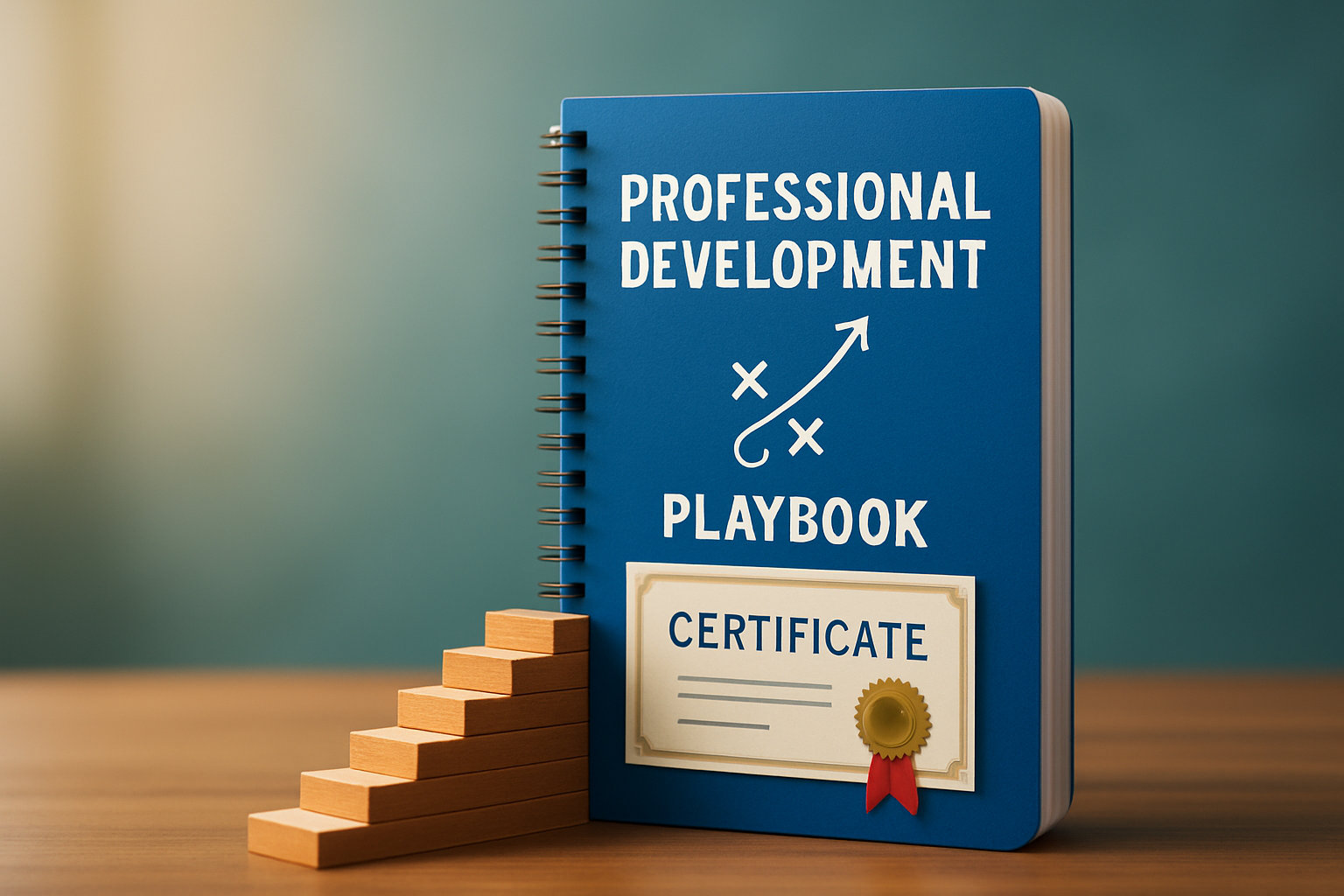
Try this simple playbook: pick a course tied to a metric your team cares about, confirm the goal with your manager, schedule two weekly learning blocks, and ship one portfolio artifact per week. Submit your certificate and a one-page impact brief when you finish. That cadence builds a public trail of trust that leadership can see and reward, and it keeps your momentum compounding across quarters instead of stalling after a single class.
Frequently Asked Questions About Choosing a Professional Development Course
How long should you plan to study each week? Most learners succeed at five to eight hours, with more for intensive exams or capstones. Will certificates matter if you already have a degree? Yes, especially when the certificate is closer to the tools and workflows you use daily. What if your company has limited tuition support? Many learners combine a promotional discount, like Apex Virtual Education’s 20 percent off code Apex, with short programs that pay back quickly in time saved and process improvements. The winning strategy is not to study longer; it is to study what leaders need to see next.
Putting It All Together: Your Next 90 Days
Week 1 to 2, select the path that maps to a visible team priority and set a baseline. Week 3 to 6, complete the course milestones and build a working artifact inside your real environment. Week 7 to 10, implement the improvement and track the change; ask a mentor to review your brief. Week 11 to 12, present the results to your manager and propose level-appropriate responsibilities for the next quarter. Repeat once per quarter and watch your skill stack, scope, and influence grow together.
Your next promotion is a story about value, told with data and reinforced by a credible credential. In the next 12 months, imagine stacking two certificates and three measurable wins that collapse timelines, sharpen forecasts, and reduce risk for your team. What could change for your career, your compensation, and your confidence if you commit to one professional development course today?
Additional Resources
Explore these authoritative resources to dive deeper into professional development course.
- Best Professional Development Courses & Certificates [2026]
- Online Professional Development Courses | Lifelong Learning
Advance Your Professional Development Course Path with Apex Virtual Education
Access expert-led, flexible certificates across Business, Accounting/Finance, Technology, Engineering, Health, Arts, Academics, Human Resources, Self-Improvement to upskill quickly and advance careers anytime, anywhere.