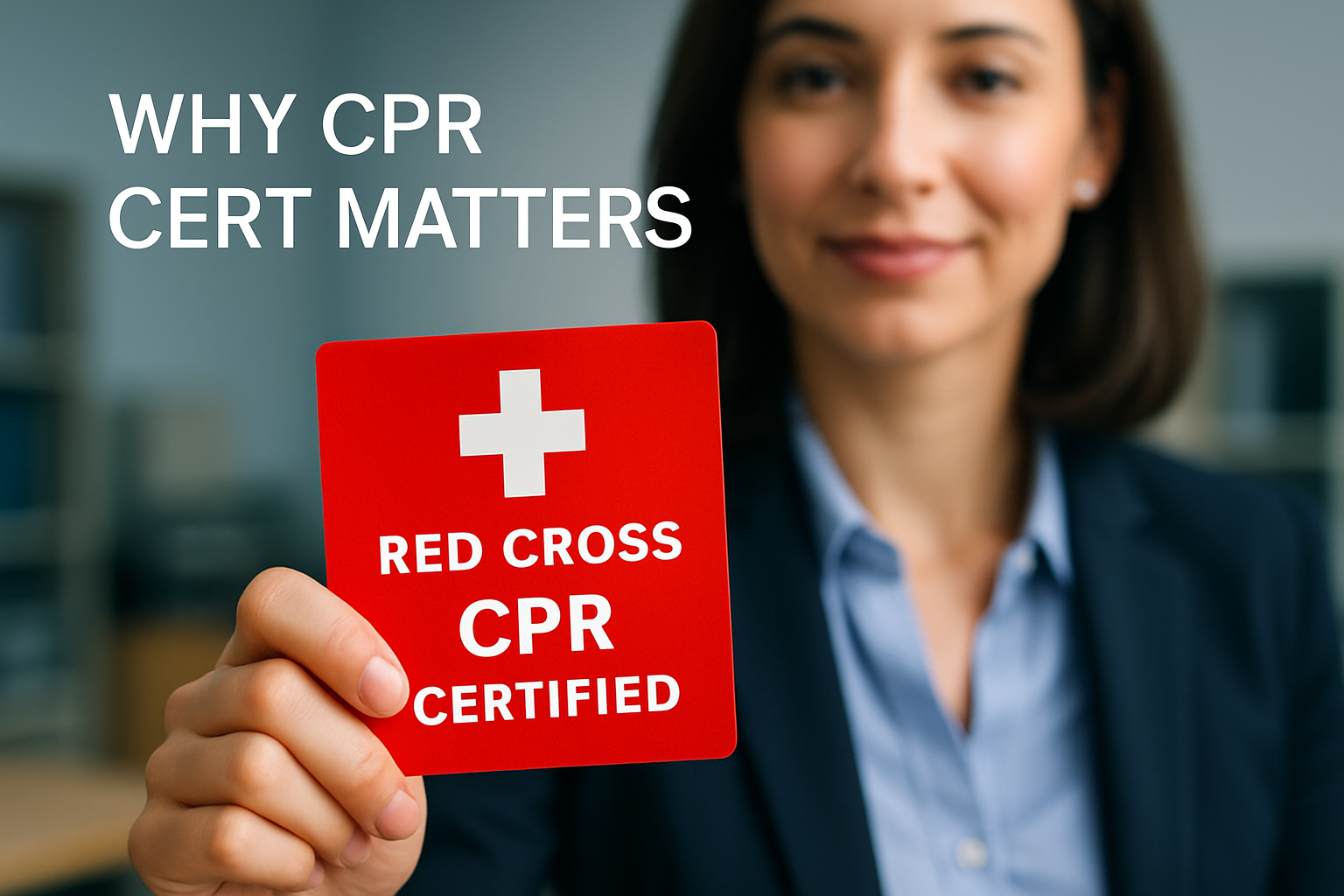
When seconds matter, a credential can be the difference between panic and a plan. For employers across healthcare, manufacturing, hospitality, education, and the public sector, the gold standard is the red cross cpr cert (cardiopulmonary resuscitation certification). It signals recognized training in adult, child, and infant CPR (cardiopulmonary resuscitation), use of an AED (automated external defibrillator), and first aid decision-making aligned to current guidelines. If you are a busy professional juggling project deadlines and family commitments, earning or renewing this certification can feel daunting—yet with the right strategy and the right learning partners, it may be possible to complete the process in a short span depending on format and availability.
Part of working smarter is building a stack of skills that travel with you. Apex Virtual Education expands your professional toolkit with flexible, online courses across Business, Accounting and Finance, Technology, Engineering, Health, Arts, Academics, Human Resources (HR [Human Resources]), and Self-Improvement. While your red cross cpr cert (cardiopulmonary resuscitation certification) validates life-saving capability, complementary learning in communication, risk management, leadership, and data literacy amplifies your value in any role. And since Apex Virtual Education issues certificates of completion for its own courses taught by industry experts, you can document growth consistently as you advance your career.
What Employers Want from a red cross cpr cert
Employers look for three things: credibility, applicability, and currency. Credibility starts with a nationally recognized provider and an assessment that includes skills observed by a qualified instructor. Applicability means the training covers scenarios relevant to your setting—adult-only for office environments, or adult and paediatric for education and childcare—and includes AED (automated external defibrillator) use and first aid basics. Currency refers to a valid, current expiration date; many organizations track these dates to maintain compliance and reduce risk exposure.
- Provider recognition: American Red Cross verification with a digital certificate and unique ID (identification) employers can check.
- Scope: Adult, child, and infant CPR (cardiopulmonary resuscitation), AED (automated external defibrillator) use, choking relief, and first aid for bleeding and shock.
- Format: Blended learning — online knowledge paired with an in-person skills session provided by an authorized training centre, often preferred for hands-on validation.
- Recency: Typical validity is two years; organizations often require renewal before expiration.
- Documentation: Official credentials from certifying bodies may include a wallet card, downloadable PDF certificate, and scannable QR code or URL for quick verification; course completion certificates from other providers can differ in format and verification method.
The rationale is practical. According to AHA (American Heart Association) summaries, immediate CPR (cardiopulmonary resuscitation) can double or triple survival rates in out-of-hospital cardiac arrest. OSHA (Occupational Safety and Health Administration) recommends having trained responders and an AED (automated external defibrillator) available, especially in high-density workplaces. For hiring managers, your red cross cpr cert (cardiopulmonary resuscitation certification) reduces response times and liability, while signalling you can stay calm, follow protocols, and lead under pressure—traits that translate well into everyday project work.
The Evidence: How CPR (cardiopulmonary resuscitation) Training Reduces Risk and Saves Lives
Why does this credential carry so much weight? Research summarized by AHA (American Heart Association) and ILCOR (International Liaison Committee on Resuscitation) shows that each minute without CPR (cardiopulmonary resuscitation) and defibrillation reduces survival by an estimated 7 to 10 percent. Early bystander action often doubles or triples a person’s chance of surviving cardiac arrest before emergency services arrive. In workplaces that run drills and maintain AED (automated external defibrillator) access, time to first compression and shock drops dramatically, which is the single most important predictor of outcomes.
Beyond life safety, there is a clear business case. Companies that invest in CPR (cardiopulmonary resuscitation)/AED (automated external defibrillator) training report fewer severe incidents, shorter downtime, and improved morale based on internal safety audits and industry benchmarking. Incident-prepared teams operate like well-rehearsed ensembles: roles are clear, equipment is ready, and the response feels almost automatic. Imagine comparing that to a team without training—it is like expecting a group to perform a musical piece they have never practiced. The difference is night and day, and employers notice it in both metrics and culture.
Choose Your Path: Online, Blended, or In-Person
Not all learning formats are created equal, and employer preferences vary. Many organizations will accept blended learning that pairs online knowledge modules with a short in-person skills assessment provided by an authorized trainer. Some roles, especially clinical roles that also require BLS (Basic Life Support), may mandate fully in-person assessments or higher-level credentials such as PALS (Paediatric Advanced Life Support). The key is aligning your path to the acceptance criteria in your industry and your own schedule constraints.
| Format | What It Includes | Time Commitment | Hands-On Requirement | Employer Acceptance | Best For |
|---|---|---|---|---|---|
| Online Knowledge Only | Concepts, videos, and quizzes for CPR (cardiopulmonary resuscitation)/AED (automated external defibrillator) | 1.5 to 3 hours, self-paced | No in-person session | Limited; many employers require a skills check | Initial learning or refreshers between renewals |
| Blended Learning | Online modules plus scheduled in-person skills assessment | 2 to 5 hours total across two parts | Yes, short in-person check | High; widely accepted for workplace readiness | Busy professionals balancing work and family |
| In-Person Classroom | Instructor-led lecture, practice, and evaluation on-site | 3 to 6 hours in one sitting | Yes, continuous instructor observation | High; often preferred for regulated roles | Teams seeking group training and drills |
Thinking about speed versus staying power? Online-first options help you preview content quickly, while blended or classroom paths ensure you build muscle memory under expert guidance. If your role requires BLS (Basic Life Support) or advanced credentials, confirm whether a skills-based evaluation is mandatory. Before you register, ask your manager or HR (Human Resources) team which providers and formats they recognize, then choose the path that balances compliance with convenience.
Time-Smart Strategies to Earn Your Credential Without Derailing Your Week
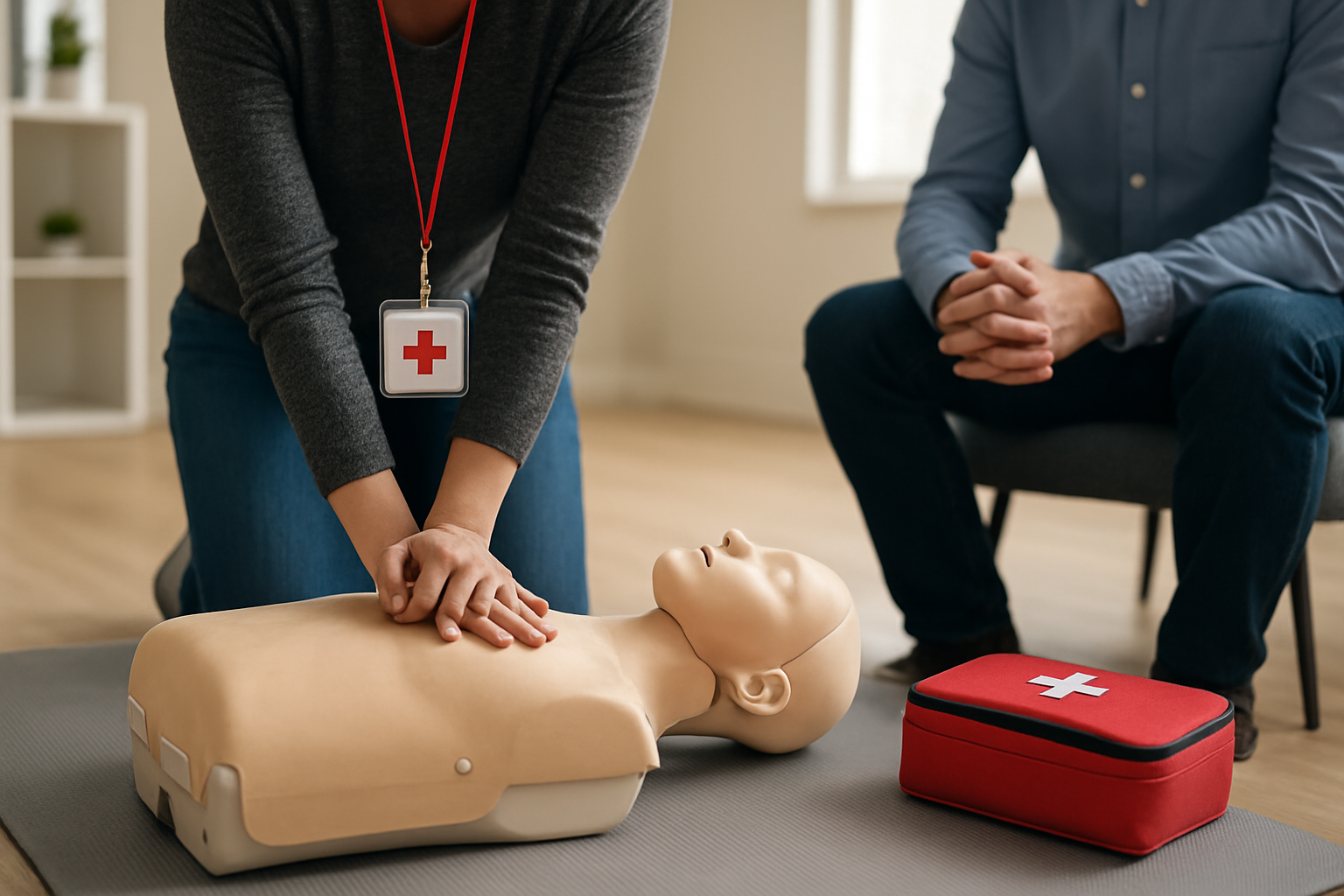
A proven approach is to break the process into manageable steps and “time-box” each one on your calendar. Start by enrolling in an approved course with an authorized training provider and, if required, locking in an in-person skills session date, then work backwards to schedule your online modules. Treat the online learning like short workouts: focused sessions with clear goals, ending with a quiz to confirm retention. By the time you reach the skills check, you will be practicing, not cramming.
- Day 1: Book your class and put the in-person session on your calendar.
- Day 2: Complete adult CPR (cardiopulmonary resuscitation) modules; take notes in your own words.
- Day 3: Finish child and infant CPR (cardiopulmonary resuscitation), plus AED (automated external defibrillator) basics; watch scenario walk-throughs.
- Day 4: Do a 30-minute practice run; visualize steps aloud to strengthen recall.
- Day 5: Attend the skills check; ask one clarifying question per skill to deepen understanding.
To supplement your preparation, Apex Virtual Education offers flexible micro-courses led by industry experts in areas such as communication, risk assessment, and decision-making under pressure. You can study anytime, anywhere, and receive a certificate when you finish—ideal for creating a consistent learning rhythm. Features like user registration, login, and a wishlist help you track progress, while curated lists like Popular and New Release ensure you discover timely content. Promotions such as 20 percent off your first purchase with code “Apex” make professional development more accessible without sacrificing quality.
Proof and Practice: Bringing Your Certification Into the Workplace
Once you earn the credential, make it visible and actionable. Add it to your resume, professional profile, and internal skills systems, and volunteer for safety drills so that practice reinforces memory. For verification, official digital certificates typically include a unique ID (identification) that employers can confirm through the certifying provider’s lookup tools. Keep a PDF copy of your certificate on your phone and any official wallet card in your badge holder in case an auditor or supervisor asks.
| Where | How to Show It | Why It Matters |
|---|---|---|
| Resume | “American Red Cross Adult and Pediatric CPR (cardiopulmonary resuscitation)/AED (automated external defibrillator), valid through 11/2027.” | Demonstrates current, verifiable skills and compliance readiness |
| Professional Profile | Add the certificate image and ID (identification) link in Licenses and Certifications | Increases recruiter visibility and reduces back-and-forth credential checks |
| Workplace | Join or lead monthly safety drills; check AED (automated external defibrillator) readiness checklist | Turns a credential into a habit, strengthening team response times |
To keep your skills sharp, set reminders 60 and 30 days before your expiration date and schedule a renewal early. Consider pairing your red cross cpr cert (cardiopulmonary resuscitation certification) with complementary learning like incident communication or leadership under stress. Apex Virtual Education’s expert-led modules can help you build these adjacent competencies, giving you an edge when you are called to coordinate response or report outcomes to management.
Build a Broader Safety and Career Edge with Apex Virtual Education
Your immediate goal is certification, but your long-term advantage comes from stacking skills that employers prize. Apex Virtual Education provides a broad catalogue of online, skill-focused courses with certificates taught by industry experts, enabling you to study anytime and anywhere. You will find categories across Business, Accounting and Finance, Technology, Engineering, Health, Arts, Academics, HR (Human Resources), and Self-Improvement, all designed to close skill gaps and support career growth.
| Career Goal | Relevant Apex Category | Example Topics | Practical Outcome |
|---|---|---|---|
| Lead safety initiatives | Health; HR (Human Resources) | Incident communication, risk assessment, policy writing | Design drills, write clear SOPs (Standard Operating Procedures), brief executives |
| Advance to people manager | Business; Self-Improvement | Coaching, feedback, conflict resolution | Guide teams calmly during emergencies and daily operations |
| Stand out in STEM (Science, Technology, Engineering, and Mathematics) roles | Technology; Engineering | Data literacy, process improvement, reliability | Use metrics to improve equipment uptime and safety checks |
| Grow financial acumen | Accounting and Finance | Budgeting, ROI (Return on Investment), cost-benefit analyses | Build business cases for training and AED (automated external defibrillator) placement |
| Communicate with clarity | Arts; Academics | Technical writing, public speaking | Deliver precise emergency briefings and post-incident summaries |
While Apex Virtual Education is not a certifying body for the red cross cpr cert (cardiopulmonary resuscitation certification), it complements your training path by building the broader capabilities that employers reward. Together, your life-saving credential and your expanding skill stack make you the colleague people count on—during emergencies and every day.
Employer Expectations by Role and Industry

Different workplaces emphasize different elements of CPR (cardiopulmonary resuscitation) competence. A school district may prioritize paediatric skills and choking relief, while a manufacturing site may stress scene safety and rapid AED (automated external defibrillator) access. Hospitals and clinics commonly require BLS (Basic Life Support) or advanced credentials, yet still value the foundational red cross cpr cert (cardiopulmonary resuscitation certification) for non-clinical staff. Clarifying expectations early helps you choose the right class and avoid last-minute surprises before onboarding or audit season.
| Industry/Role | Typical Requirement | Notes for Candidates |
|---|---|---|
| Healthcare (non-clinical) | Red Cross CPR (cardiopulmonary resuscitation)/AED (automated external defibrillator) or BLS (Basic Life Support) | Confirm if BLS (Basic Life Support) is mandatory for your department |
| Education and Childcare | Adult and Pediatric CPR (cardiopulmonary resuscitation)/AED (automated external defibrillator) | Ensure pediatric components and choking protocols are included |
| Manufacturing and Warehousing | CPR (cardiopulmonary resuscitation)/AED (automated external defibrillator); first aid | Practice scene safety and equipment readiness checks |
| Hospitality and Events | CPR (cardiopulmonary resuscitation)/AED (automated external defibrillator) for guest-facing teams | High foot-traffic areas increase the value of rapid response |
| Public Sector and Community Services | CPR (cardiopulmonary resuscitation)/AED (automated external defibrillator); annual drills | Align with local policies and audit schedules |
Not sure what your employer requires? Ask your HR (Human Resources) partner for a short policy summary and a list of accepted providers. If you are a manager, consider coordinating team enrolment to streamline compliance. Pair formal training with short, monthly practice scenarios led by trained volunteers; these micro-drills keep confidence high and reinforce the muscle memory that saves lives.
How Apex Virtual Education Streamlines the Learning Journey
Busy professionals need two things: flexibility and results. Apex Virtual Education was built with both in mind. Courses are skill-based and foundational, taught by industry experts with resource materials you can save and revisit. The platform issues certificates for completed courses, helping you demonstrate progress between major credentials like your red cross cpr cert (cardiopulmonary resuscitation certification).
Think of your career development like a layered safety net. Your red cross cpr cert (cardiopulmonary resuscitation certification) is the anchor strand for emergencies, while Apex Virtual Education adds reinforcing strands: leadership, analysis, communication, and compliance. Because the catalogue spans Business, Accounting and Finance, Technology, Engineering, Health, Arts, Academics, HR (Human Resources), and Self-Improvement, you can build precisely the combination that fits your goals.
Final Thoughts
One credential can save a life and elevate your career at the same time. In the next 12 months, more employers will track safety skills as closely as technical ones, rewarding professionals who can lead calmly and act decisively when the unexpected happens. Ready to turn intent into action and pursue or renew your red cross cpr cert (cardiopulmonary resuscitation certification)?
Additional Resources
Explore these authoritative resources to dive deeper into red cross cpr cert.
Support Your CPR Certification Journey with Apex Virtual Education
Build career-ready skills that complement your red cross cpr cert with expert-led, flexible courses across Business, Accounting/Finance, Technology, Engineering, Health, Arts, Academics, HR (Human Resources), and Self-Improvement.