If you are evaluating online cne (Continuing Nursing Education) this year, you probably want two things at once: credits that your board recognizes and learning that you can immediately use in patient care. The reality is that not all digital courses are created equal, and the difference between a quick slide deck and an accredited, practice-ready program can affect your license renewal, your competence at the bedside, and your confidence on the next shift. This guide offers a clinician-tested checklist to help you verify accreditation, compare providers, and choose courses that fit your schedule without sacrificing rigor. Along the way, we will also show how Apex Virtual Education offers flexible, skill-based learning across health and allied domains—through self-paced courses, scheduled webinars, and downloadable resources—that can complement your online CNE choices; accreditation and acceptance of contact hours should be verified with your accreditor or state board.
Terminology can be confusing, so let’s align on a few essentials before you shop. Many providers still use CNE (Continuing Nursing Education), while the American Nurses Credentialing Centre reintroduced the term NCPD (Nursing Continuing Professional Development), and some sites talk about CEU (Continuing Education Unit) or simply “contact hours.” Most state Boards of Nursing, often abbreviated as BON (Board of Nursing), specify contact hours and recognize courses from accredited providers such as ANCC (American Nurses Credentialing Centre) or state-approved organizations. Always check your state’s rules, your role requirements, and any employer preferences, then use the checklist below to pick options that are both compliant and clinically useful.
Online cne: Why It Matters Now
Regulatory renewal is the baseline, but the stakes are higher than a certificate on your wall. Clinical complexity is rising, interprofessional teamwork is expanding, and digital transformation is changing documentation, communication, and quality metrics in real time; accessible, credible online learning helps you keep pace without sacrificing shifts or family time. Research summaries suggest that well-designed eLearning can produce 25 to 60 percent higher retention than traditional lectures, especially when courses use scenario-based practice, retrieval practice, and spaced repetition. For busy professionals who split time between inpatient, outpatient, and community settings, asynchronous modules, short mobile lessons, and strong assessments turn commutes and downtime into meaningful progress.
The benefits extend beyond individual learning to team outcomes. Units that align education with current quality initiatives often see faster adoption of protocols, fewer near-misses, and improved patient experience scores, particularly when training is case-based and paired with checklists on the unit. Employers appreciate the audit trail of completions and the ability to recommend consistent resources to teams, while you appreciate having a single place to track hours, download certificates, and revisit reference materials before a high-acuity case. That is the promise of strategic online cne (Continuing Nursing Education) in 2025: compliance and competence delivered wherever you practice.
Accreditation Essentials: How to Verify a Course Truly Counts
Accreditation is the first gate. Look for an accreditor statement that names the accrediting body, the approved provider, and the exact number and type of credits or contact hours; examples include ANCC (American Nurses Credentialing Centre) approval language or a state-level BON (Board of Nursing) authorization. If you are a Nurse Practitioner, check whether advanced practice pharmacology hours are specified, and if you are in a compact state or hold multiple licenses, verify how each jurisdiction treats provider approvals. When in doubt, email your BON (Board of Nursing) or the provider’s support team with the course link and request written confirmation of acceptance for your role and renewal period.
Beyond the logo, evaluate the entire audit trail you would need for an audit or employer review. Does the certificate include your name, a unique certificate number, the provider’s approval number, the statement of credit, the completion date, and learning objectives? Are faculty disclosures included, with conflicts of interest noted and resolved? Are learning outcomes tied to evidence and updated within the last two to three years? The table below consolidates the signals that separate a credible course from a risky one.
| What to Verify | Where to Find It | Why It Matters | Red Flags |
|---|---|---|---|
| Accreditor and provider number (for example, ANCC (American Nurses Credentialing Center) or state BON (Board of Nursing)) | Course page footer, “Accreditation” tab, or certificate sample | Establishes recognition and portability of your contact hours | Vague badges, missing provider number, or “pending approval” |
| Target audience and scope | Course description and learning objectives | Ensures content matches your role and renewal requirement | Generic claims like “for all clinicians” with no specifics |
| Credit type and quantity | Accreditation statement on product page | Confirms contact hours, pharmacology hours, or specialty credit | Only CEU (Continuing Education Unit) listed without conversion guidance |
| Faculty credentials and disclosures | Faculty bios and disclosure statements | Reduces bias and increases trust in recommendations | No disclosures or promotional tone tied to a product |
| Certificate details | Certificate sample or FAQ | Provides audit-ready documentation you can store and submit | Download blocked, missing completion date, or no learner name |
| Evidence currency | References list and last-updated date | Aligns learning with current guidelines and pathways | Outdated citations or broken links to evidence |
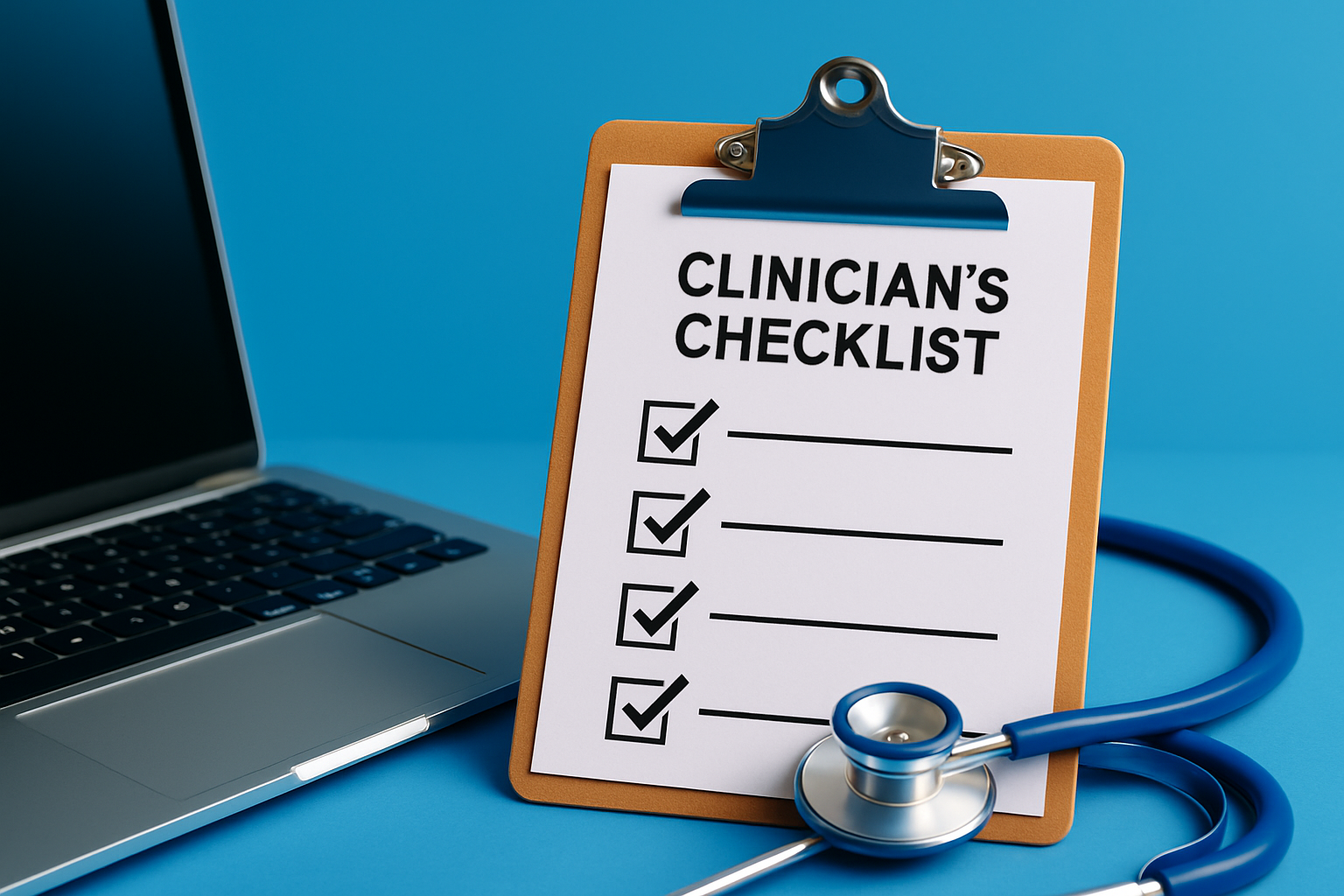
The Clinician’s Quality Checklist for Online CNE, Step by Step

Once accreditation is clear, shift to quality and usability. High-impact courses state specific, measurable objectives, align modules with those objectives, and include meaningful assessment beyond a token quiz. Look for case vignettes, branching decisions, and debrief explanations that map knowledge to action; a course that explains why an answer is correct builds transfer to practice better than one that only reports a score. Finally, check the learning design: downloadable job aids, reflection prompts, and post-course implementation tips can make the difference between passive viewing and changed behaviour on your next shift.
- Confirm the accreditor statement and provider number match your state’s accepted list.
- Match the course to your role and setting; a paediatric sepsis module is not ideal for an adult oncology clinic.
- Scan objectives for action verbs, clinical relevance, and alignment with your goals.
- Review faculty experience in the topic and verify disclosures for bias.
- Open the syllabus or module outline to gauge depth, time, and assessment rigor.
- Favor courses with case-based practice, simulations, or branching decisions.
- Check accessibility: transcripts, captions, mobile responsiveness, and offline resources.
- Verify certificate details and storage options, including one-click download to your device.
- Read recent reviews to validate real-world applicability and support responsiveness.
- Plan for transfer: look for checklists, job aids, or a quick-start guide you can use on the unit.
- Quick red flags: unrealistic promises like “100 percent pass without study,” missing disclosures, heavy product promotion, or no way to contact support.
Compare Cost, Time, and ROI (Return on Investment)
Time and budget matter, especially when you are balancing shifts, family, and perhaps graduate study. Market surveys suggest that individual accredited courses typically range from 15 to 30 dollars per contact hour, while bundles and subscriptions can bring that down to 5 to 12 dollars per hour if you complete several modules in a cycle. Live conferences add networking value but require travel and days off; live webinars offer interaction without travel but may not fit your calendar. The table below helps you consider format, typical cost, and how each option supports skill transfer so that your spend turns into safer care and measurable professional growth.
| Option | Typical Cost per Contact Hour | Time Commitment | Strengths | Considerations |
|---|---|---|---|---|
| Self-paced accredited modules | £15–£30 | 30–90 minutes per course | Anytime access, pause/resume, strong assessments | Quality varies; verify accreditor and recency |
| Subscription bundles | £5–£12 (effective) | Flexible across a year | Large catalogue, predictable budget, curated learning paths | Requires planning to fully use |
| Live webinars | £10–£25 | 1–2 hours at set time | Interaction and Q&A | Scheduling conflicts reduce completion |
| Conferences or workshops | £20–£50 (plus travel) | 1–3 days | Networking, hands-on practice | Higher cost and time away from work |
| Employer-provided training | Often included | During work hours | Aligned with protocols and systems | May not cover all role-specific needs |
Practice-Ready Learning: From Screen to Safer Care

What makes a program “practice-ready” is not just the topic but the path from knowledge to action. Courses that begin with a brief pre-check focus your attention, while scenario-based practice and debriefing explain not only what to do but why it matters in context. Job aids, pocket cards, and short checklists transform key actions into on-the-unit habits, and a brief post-course plan nudges you to try one change in the next seven days. Do these elements require more from the designer? Yes, but the payoff is higher retention, faster protocol adoption, and better outcomes for your patients.
Consider a realistic example. A sepsis early recognition module uses three patient vignettes with evolving vitals, requiring you to select next steps and interpret lactate results; after each decision, you see rationale tied to evidence and local pathways. A downloadable workflow checklist summarizes steps for triage, escalation, and documentation, and a final reflection prompt asks what you will do differently on the next shift. When your next patient meets criteria, the mental model is fresh, your actions are faster, and your documentation supports the care you delivered. That is the practical return of online cne (Continuing Nursing Education) that is designed for everyday clinical decisions.
How Apex Virtual Education Supports Your Plan
Apex Virtual Education is an online learning platform built for professionals who need flexible, skill-based training they can apply immediately. The catalogue spans Business, Accounting and Finance, Technology, Engineering, Health, Arts, Academics, Human Resources (HR), and Self-Improvement, giving you breadth for interdisciplinary development alongside your clinical focus. Courses are taught by industry experts, include robust resource materials, and issue certificates of completion that you can store for your files or employer records. With user accounts for registration and login, a Wishlist to organize what is next, and curated categories such as Health, you can plan a year of learning without guesswork and study anytime, anywhere on your preferred device.
While Apex Virtual Education does not serve as an accrediting body and does not guarantee ANCC or state Board of Nursing (BON) recognition or approval for its courses, its health and practice-focused offerings are designed to be practical, evidence-informed, and aligned to foundational and career-ready skills. Many clinicians use Apex Virtual Education to strengthen core competencies, fill skill gaps in leadership or quality improvement, and complement their accredited coursework elsewhere; when you do require specific credit acceptance, verify the accreditor statement with your BON (Board of Nursing) before purchase. For employers, Apex Virtual Education offers an efficient way to recommend consistent resources to teams across locations and shifts while tracking completions with certificates of completion.
Pro Tips to Maximize Learning and Minimize Friction
Great choices still need a great plan. Batch similar topics and block calendar time in 30 to 45 minute sessions; habit science shows that consistent routines increase completion rates and reduce procrastination. Pair a clinical course with a complementary skill course, such as communication for safety or data literacy for quality dashboards, to translate learning into better teamwork. Finally, archive every certificate into a single cloud folder labelled by renewal cycle and keep a simple spreadsheet log with date, provider, title, and contact hours so you are always audit-ready.
- Create a two-cycle roadmap: this renewal’s must-haves and the next cycle’s growth goals.
- Use mobile time wisely: one case or one module on a commute equals one finished course a week.
- Preview a sample lesson to gauge level and pacing before you buy.
- Invite a colleague to take the same course and discuss one practice change you will test.
- Apply what you learn within 48 hours using a mini PDSA (Plan-Do-Study-Act) cycle.
Remember, the goal is not just a certificate; it is safer care, smoother teamwork, and stronger career momentum. With a clear checklist, accredited sources, and platforms like Apex Virtual Education for flexible skill-building, you can turn learning into measurable progress. If a course helps you act faster, communicate better, and document precisely, it is worth your time—and likely to stand up in an audit.
Your next step is straightforward: pick one clinical gap, run the checklist above, and schedule the first session this week. Choose an accredited module for credit, then add a skills course from Apex Virtual Education to expand your impact. Keep your certificates together, capture a quick reflection after each course, and share one insight with your team. That simple loop will keep your learning aligned with real-world priorities and make every hour of online cne (Continuing Nursing Education) count.
This guide promised a simple, reliable way to choose accredited, practice-ready courses that fit your life. In the next 12 months, imagine tracking completions effortlessly, applying new skills on shift, and earning recognition for outcomes that matter. Which capability will you strengthen first to turn online cne (Continuing Nursing Education) into tangible career momentum?
Additional Resources
Explore these authoritative resources to dive deeper into online cne.
Elevate Online CNE (Continuing Nursing Education) with Apex Virtual Education
Study anytime, anywhere with expert-led courses and certificates to plan and complete online CNE (Continuing Nursing Education) for clinicians, students, teams, and employers seeking measurable skill growth.