
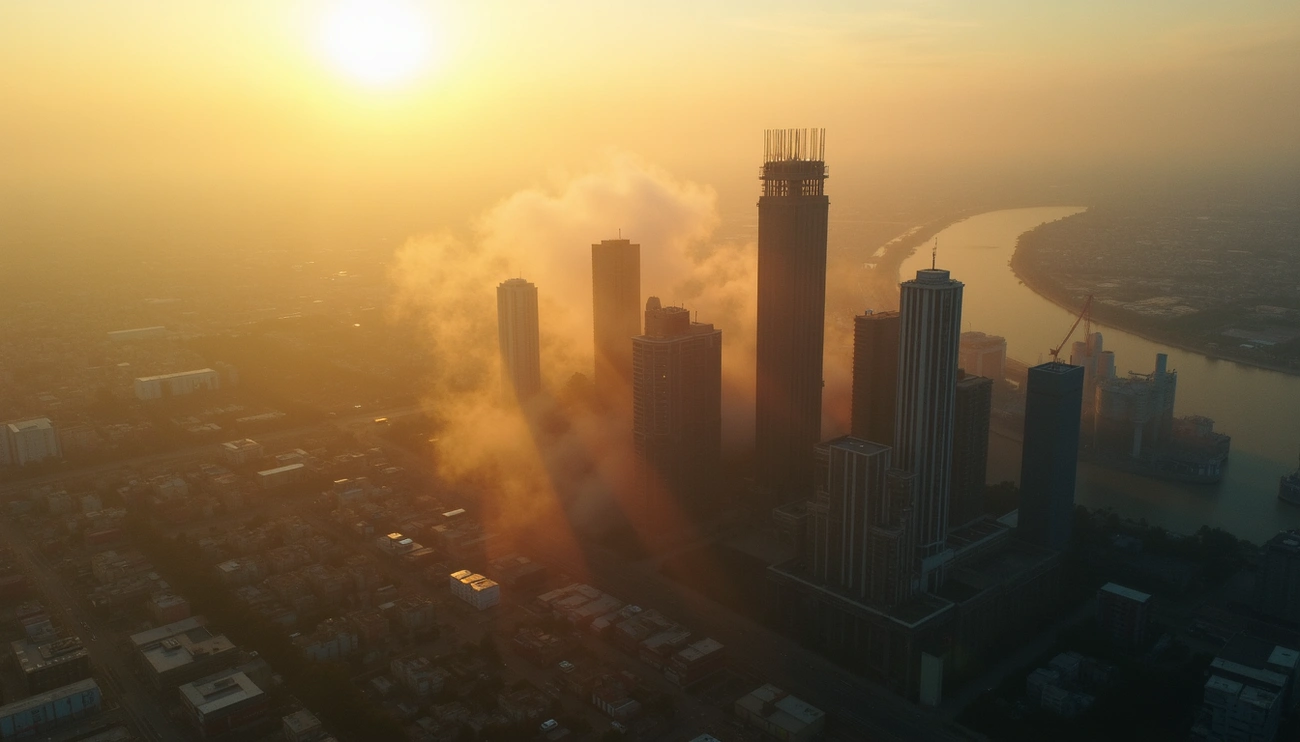
What is air pollution beyond the visible smog hanging over cities? Despite widespread awareness of vehicle emissions and industrial smokestacks, numerous hidden sources contaminate the air we breathe daily. In fact, these overlooked pollution sources contribute to approximately 7 million premature deaths annually worldwide. From household cleaning products releasing toxic compounds to construction dust carrying dangerous particulates, the invisible threats surrounding us extend far beyond obvious culprits.
Furthermore, while urban planners focus on regulating traffic and industrial zones, they often neglect indoor pollution sources that can be 2-5 times more concentrated than outdoor pollutants. Similarly, waste management facilities, agricultural activities near urban centers, and even the friction of vehicle brakes and tires all release harmful substances into our atmosphere. Understanding these hidden contributors is essential for developing comprehensive strategies to combat declining air quality in major cities across the globe.
Urban Planners Overlook Indoor Pollution Sources
While most people spend approximately 90% of their time indoors, urban planning efforts predominantly focus on outdoor pollution sources, leaving indoor air quality largely unregulated. Indoor air pollutants can reach concentrations 2-5 times higher than outdoor levels [1], creating significant yet overlooked health risks in urban environments.
Household cleaning agents release volatile organic compounds
Everyday cleaning products represent a major source of volatile organic compounds (VOCs) that contaminate indoor air. Studies have found that women using conventional bleach products, disinfecting wipes, and dish soap experienced higher breathing zone concentrations of several harmful VOCs, including chloroform, carbon tetrachloride, and 1,4-dioxane [2]. Additionally, research examining 30 common cleaning products identified 530 unique VOCs, with 193 considered hazardous according to regulatory agencies [3].
These chemical exposures aren’t merely inconvenient—they carry substantial health consequences. Scientific reviews have established that regular use of cleaning products, particularly sprays, is associated with a 40% increase in wheeze, a 50% increase in asthma symptoms or medication use, and approximately a 100% increase in physician-diagnosed asthma [1]. Consequently, even “green” cleaning products can release concerning fragrance chemicals, although at generally lower levels than conventional alternatives.
Cooking and heating methods contribute to indoor air degradation
Cooking activities generate pollution spikes that often exceed outdoor pollution levels in major cities. Research examining indoor air quality in 300 homes found that cooking produced significant pollution spikes in VOCs and particulate matter [4]. Surprisingly, making breakfast created higher PM2.5 levels than those found on the streets of Delhi, one of the world’s most polluted cities [5].
Gas cooking particularly threatens indoor air quality. These appliances release nitrogen dioxide (NO2), carbon monoxide, carbon dioxide, and methane—even when not in use [6]. Gas stoves can produce indoor NO2 pollution exceeding World Health Organization air quality guidelines and UK legal outdoor air pollution standards [6]. The health impact is significant—research suggests that gas cooking’s contribution to childhood asthma is comparable to that of second-hand smoke [6].
Poor ventilation traps pollutants in high-density housing
Inadequate ventilation systems amplify pollution risks, particularly in high-density urban housing. Currently, 8 million people in England live in 3.7 million homes that are cold, damp, or in disrepair; conditions that foster respiratory infections and worsen existing lung conditions such as asthma [4]. In poorly ventilated dwellings, indoor smoke can contain fine particle levels 100 times higher than acceptable limits [7].
Urban planning decisions directly influence these outcomes. The layout of streets and buildings functions as a city-wide respiratory system, either facilitating fresh air circulation or trapping pollutants [8]. Nevertheless, building codes influenced by urban planning priorities often fail to integrate airconditioning and ventilation systems effectively. This oversight creates tension between energy efficiency and air quality, as residents rarely run air conditioning with windows open [9].
Building design challenges are particularly acute in multi-unit residential buildings, where cooking odors frequently move between apartments, and exhaust systems lack proper air makeup paths [9]. Effective urban planning would incorporate zoning that creates buffer distances allowing pollutants to disperse before entering living spaces [8]. However, the current regulatory framework remains fragmented around product sectors rather than holistically managing indoor emission sources [10].
Construction Sites Emit Unregulated Dust and Particulates
Construction sites stand as silent contributors to urban air pollution, often flying under the regulatory radar. Construction activities currently represent 22% of total PM10 emissions and 4% of total PM2.5 emissions nationwide [11]. This significant contribution makes construction one of the most concerning yet underregulated sources of particulate pollution in major metropolitan areas.
Demolition and excavation release PM2.5 and PM10
During demolition and excavation operations, vast quantities of dust containing harmful particulates enter the atmosphere. These activities release both coarse particles (PM10) and fine particulate matter (PM2.5), with construction projects typically producing a higher proportion of coarse particles compared to other pollution sources [11]. Once these particles become airborne, suppression becomes virtually impossible [12].
The health implications are severe. Construction dust contributes to approximately 36,000 premature deaths in the UK annually, with around 4,000 occurring in London alone [13]. These airborne pollutants affect not only construction workers but also nearby residents exposed to high concentrations of emissions [13].
In dense urban environments, the impact intensifies. In London specifically, construction contributes approximately 30% of all particulate matter (PM10) [13]. Moreover, demolition and construction release various hazardous substances including:
- Asbestos fibers from older buildings
- Heavy metals from construction materials
- Chemical contaminants embedded in structures [14]
Lack of dust control measures in developing cities
Across developing urban centers, dust control measures remain inconsistently implemented. Currently, SPG8 guidelines require construction companies to develop and submit Dust Management Plans during planning stages, yet enforcement varies widely [15]. Without proper controls, PM10 concentrations at site boundaries frequently exceed the permissible limit of 50 µg/m³ over a 24-hour period [15].
Effective dust control demands comprehensive strategies. Water suppression techniques—regularly spraying high-dust areas during dry or windy periods—represent one of the most effective methods for keeping PM10 levels within acceptable limits [15]. Unfortunately, these practices require consistent application and monitoring that many developing cities cannot maintain.
The challenge intensifies in arid regions where soil easily becomes dry and airborne in high winds [16]. Without vegetation barriers or proper moisture maintenance, construction dust travels considerable distances, affecting areas far beyond the immediate vicinity.
Construction vehicle emissions often go unchecked
Beyond the dust itself, construction machinery presents another significant pollution source. Most construction equipment operates on diesel fuel, releasing substantial amounts of carbon monoxide, carbon dioxide, nitrogen oxides, and hydrocarbons into the urban atmosphere [16]. These emissions remain largely unregulated compared to passenger vehicles [16].
On extensive construction projects, equipment often runs continuously for extended periods, creating persistent pollution hotspots within urban environments. The Non-Road Mobile Machinery (NRMM) contributes significantly to urban air quality degradation through exhaust emissions [17]. Starting January 2025, all NRMM in London will need to meet Stage IV emissions standards, with eventual requirements for zero-emission equipment by January 2040 [17].
Ultimately, addressing construction pollution requires both regulatory oversight and technological innovation. Experience shows that while exhaust emissions from on-site plant and site traffic may not significantly impact local air quality in individual cases, their cumulative effect across multiple construction zones substantially degrades urban air quality [10]. Without stronger regulation and enforcement, construction sites will continue releasing dangerous levels of particulates into urban environments worldwide.
Waste Management Practices Release Toxic Fumes
Improper waste disposal presents a serious yet often unrecognized threat to air quality in urban centers worldwide. About 50% of global waste is not managed properly, with substantial amounts ending up in open dumps or burned illegally [18]. These practices release numerous hazardous substances that degrade air quality and pose significant health risks to nearby populations.
Open burning of waste emits dioxins and black carbon
Open burning of waste represents an uncontrolled, low-temperature combustion process that releases a dangerous cocktail of pollutants. This practice emits fine particles comprised of black carbon, organic carbon, heavy metals, and a wide range of gasses [19]. Even more concerning, waste burning releases semi-volatile organic compounds including polychlorinated dibenzo-p-dioxins (PCDDs) and dibenzofurans (PCDFs), collectively known as dioxins [19].
The health impacts of these emissions are severe. Studies have linked exposure to dioxins and related compounds with carcinogenicity, reproductive toxicity, immunotoxicity, and endocrine disruption [19]. Indeed, research has found that open burning can release up to 1,000 different chemical substances into the environment [20]. The practice is especially hazardous when plastics are involved—burning polyvinyl chloride or Styrofoam releases toxic dioxins, chlorinated furans, or styrene gas [21].
Importantly, small-scale community burning actually poses greater health risks than fires at large dumping grounds due to higher probability of human exposure and lower dispersive dilution of ground-level emissions [21].
Landfills leak methane and other harmful gasses
Landfills generate various pollutant gasses through waste decomposition. Most notably, they emit methane when organic waste decomposes without oxygen [22]. Recent studies indicate the Environmental Protection Agency (EPA) is underestimating methane emissions from landfills by 51% [1]. This is particularly alarming since landfills represent approximately 20% of global methane emissions [2].
The climate impact is substantial—methane traps 86 times more heat in the atmosphere than carbon dioxide over a 20-year period [3]. Beyond methane, landfills release hydrogen sulfide, volatile organic compounds, and microorganisms that can be transported by air [22].
Research examining specific landfill gas collection systems found they are much less effective than previously thought. Among facilities that recover gas, methane levels were measured at more than 200% higher than estimates from the Greenhouse Gas Reporting Program [1]. Furthermore, landfill management failures can lead to catastrophic events like the 2015 Shenzhen, China landfill collapse that killed 73 people [23].
Informal recycling sectors lack emission controls
Informal waste recycling, especially for electronic waste, creates significant pollution through crude processing methods. E-waste burning sites have been found with PM10 concentrations of 243.310 μg/m³, along with elevated heavy metals in the air [24]. These high levels of air pollution from e-waste processing have been associated with increased cardiovascular problems among nearby residents [24].
Waste workers face direct exposure to toxic materials, gaseous emissions, bio-aerosols, and microorganisms [23]. Studies have found high blood concentrations of lead in recyclers working in landfills, and female waste recyclers show higher concentrations of lead and dioxin-related compounds in breast milk [23]. Unsafe recycling methods introduce hazardous plastic additives including brominated flame retardants and heavy metals that are implicated in nervous system problems, reproductive issues, behavioral changes, and cancer [23].
Unfortunately, informal e-waste recycling contributes to severe environmental degradation through hazardous practices like open-air burning, acid bathing, and improper dismantling [7].
Agricultural Activities Near Cities Worsen Air Quality
Agricultural emissions have emerged as a hidden yet substantial contributor to urban air pollution worldwide. Studies reveal that farming activities can contribute between 25% and 38% of air pollution affecting human health in UK cities—surpassing the pollution generated within the cities themselves [5]. This agricultural impact extends far beyond rural boundaries, creating widespread health issues in metropolitan areas.
Ammonia from fertilizers reacts to form secondary particulates
Ammonia emissions from fertilizer application represent a primary threat to urban air quality. Agriculture generates 87% of total ammonia emissions [6], which then combines with other pollutants to create dangerous fine particulate matter. Though ammonia itself remains in the atmosphere for only hours, once it reacts with nitrogen oxides or sulfur dioxide, it forms persistent particles that can travel great distances [6]. Research demonstrates that ammonia contributes to approximately 50% of PM2.5 air pollution in Europe and 30% in the US [25], subsequently causing chronic respiratory illnesses and premature deaths.
Livestock operations emit methane and VOCs
Concentrated animal feeding operations (CAFOs) release significant quantities of harmful gasses into surrounding areas. Livestock waste stands as the dominant contributor to ammonia emissions [26], with cattle accounting for approximately two-thirds of all emissions from livestock and 43% of total ammonia emissions [6]. The problem continues to grow as the number of CAFOs increased 16% from 2011 to 2022 [26]. Beyond ammonia, livestock operations emit methane through enteric fermentation, contributing 51% of UK methane emissions [27]. These facilities disproportionately affect vulnerable populations, as CAFOs are more common in high-poverty and majority-non-White communities [26].
Pesticide drift affects peri-urban populations
Residents living near agricultural lands face exposure to pesticides through spray drift and volatilization. Pesticide levels in carpet dust and metabolites in urine increase with proximity to crop fields [28]. Studies found that children in agricultural areas had five times the concentration of pesticides in their urine compared with children in urban areas [28]. Carpet dust serves as a significant reservoir for these chemicals, with pesticide levels 10-200 fold higher than in surrounding soil [28]. Disturbingly, homeowners apply up to 10 times more chemical pesticides per acre in urban environments than farmers use on crops [9], further intensifying exposure in peri-urban communities.
Transport-Related Pollution Extends Beyond Vehicles
Beyond tailpipe emissions, numerous overlooked transport-related sources now dominate urban air pollution. Research demonstrates that non-exhaust emissions (NEE) have emerged as the primary source of particulate matter from road transport in the UK.
Brake and tire wear release micro-particles
Tire particles can produce up to 2,000 times more particle pollution than what comes from exhausts [29]. Currently, brake emissions from vehicles measure approximately 5×10^9 particles per kilometer per brake [30]. Vehicle weight plays a critical role in pollution levels—decreasing tire pressure from 2.9 to 2.0 bar resulted in an 8-fold increase in particle emissions [30]. Electric vehicles present a mixed impact: regenerative braking reduces brake wear, yet their heavier batteries may increase tire wear [31].
Shipping ports and airports are major emission hubs
Shipping operations contribute significantly to city center pollution, with 6.5%-62% of nitrogen dioxide concentrations attributable to maritime activities [32]. Across six major European port cities, shipping accounts for an average of 28% (7.1 μg/m3) of NO2 levels [32]. Meanwhile, at airport locations, aviation contributes 38% to NO2, 45% to SO2, and 6% to PM2.5 concentrations [4], with effects extending 300 km from major airports [8].
Delivery logistics increase urban congestion and emissions
Freight transport generates approximately half of local air pollutants in cities [33]. Urban logistics systems cause negative externalities including pollution, noise, and congestion [34], increasingly problematic as online retail expands to nearly 20% of total retailing by 2025 [35].
Conclusion
Air pollution threatens our cities through numerous hidden sources that demand immediate attention. The evidence clearly shows how urban planners consistently overlook indoor pollution, despite people spending 90% of their time inside spaces where pollutant concentrations exceed outdoor levels by 2-5 times. Household cleaning products, gas cooking, and poor ventilation systems collectively create dangerous living environments, particularly in high-density housing.
Additionally, construction sites represent major pollution contributors, releasing harmful particulate matter during demolition and excavation activities. These sites often operate with minimal dust control measures, especially in developing cities where regulatory enforcement remains inconsistent. Construction vehicles further compound this problem through unchecked emissions.
Waste management practices likewise pose significant threats. Open burning releases toxic dioxins and black carbon, while landfills leak methane at rates 51% higher than previously estimated. The informal recycling sector, particularly for electronic waste, operates without emission controls, exposing workers and nearby communities to hazardous materials.
Agricultural activities near urban centers actually contribute more to city air pollution than previously recognized. Ammonia from fertilizers combines with other pollutants to form dangerous particulate matter, while livestock operations release methane and volatile organic compounds. Pesticide drift disproportionately affects populations living near farming areas.
Transport pollution extends far beyond tailpipe emissions. Brake and tire wear now produce substantially more particles than exhaust systems. Shipping ports and airports function as major emission hubs, significantly degrading air quality in surrounding areas. Delivery logistics, driven by expanding online retail, further increase urban congestion and emissions.
Therefore, addressing air pollution requires a comprehensive approach that acknowledges these hidden sources. Urban planners, policymakers, and citizens must work together to develop integrated solutions that target both obvious and overlooked pollution contributors. Only through such coordinated efforts can we hope to create healthier, more sustainable cities for future generations.